- ▸ Chicken Subway's one real edge over the family is the 3-lane branching pick each step, not a linear advance.
- ▸ RTP: Chicken Subway 98.00%, tying the original Chicken Road and beating Chicken Road 2 and Rabbit Road at 95.5%.
- ▸ Chicken Cross (UpGaming) publishes the highest sourced RTP here at 99%; Mines (Spribe) sits at 97%.
- ▸ The $10,000 per-round cap applies to Chicken Subway, so the x55,000 headline is a mirage.
- ▸ For a documented multi-mode risk ladder or a longer track record, the original Chicken Road is the better-documented pick.
Reviewed game
 Chicken Subway (100HP Gaming)
Play the game
18+ | T&C apply | Play responsibly
Chicken Subway is 100HP Gaming's branching-lane take on the step-multiplier format made popular by Chicken Road. If you like the cash-out-before-you-lose loop, its closest relatives are Chicken Road, Chicken Road 2, Rabbit Road and the grid-based Mines. Here is how they compare on RTP, max win and feel.
Games like Chicken Subway, and how they compare
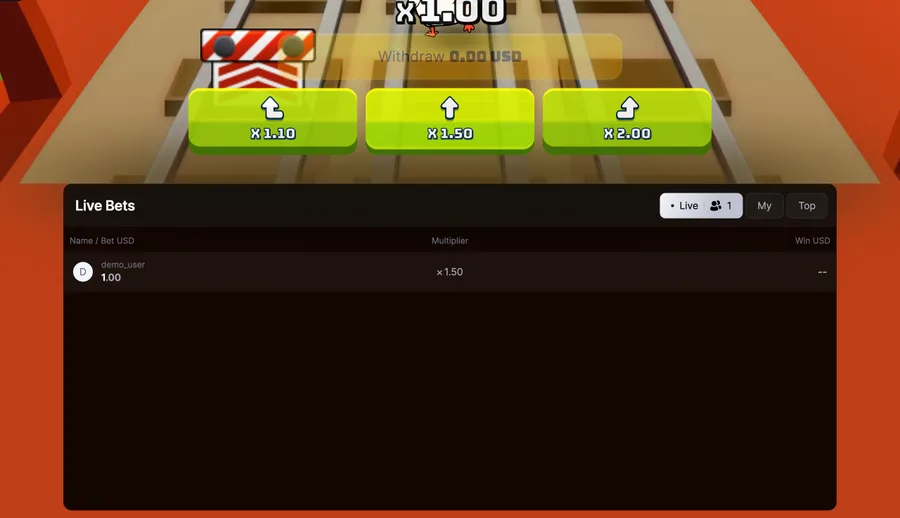
If you like Chicken Subway, the closest matches sit in the "chicken crossing" crash family, and the one that genuinely plays differently is Chicken Road by InOut Games, the 98% RTP game that pulls roughly 244,000 searches a month worldwide. The honest headline: Chicken Subway is one of the newest members of a crowded road-cross genre, and it earns its place with a single real twist. At every step you get three lanes to choose from, each showing its own multiplier, and you tap one to move forward. Most of its rivals only let you advance or cash out. That branching pick is the difference that matters.
We played each of these in the free demo where one was available, and we compared them on the numbers that are actually sourced rather than the marketing figures. Below is the short version, then the detail. If you want the mechanics first, read how Chicken Subway works; for the payout maths, see the RTP and max win page.
Key takeaways
The chicken-crossing crash family at a glance
Here are the five closest neighbours with their sourced RTPs. We publish only figures a structured source carries, so where a sibling's max win is unconfirmed we leave it out rather than guess.
| Game | Developer | RTP | Distinguishing mechanic |
|---|---|---|---|
| Chicken Subway | 100HP Gaming | 98.00% | 3-lane branching pick each step, ~5-second timer, $10,000 cap |
| Chicken Road | InOut Games | 98.00% | Linear advance-or-cashout; the genre archetype and biggest neighbour |
| Chicken Road 2 | InOut Games | 95.5% | Sequel with a longer lane count; same road-cross engine |
| Rabbit Road | InOut Games | 95.5% | Rabbit crosses a garden; same InOut engine, different skin |
| Chicken Cross | UpGaming | 99% | Multi-lane road-cross with adjustable volatility |
| Mines | Spribe | 97% | 5x5 grid tile-pick; a cousin, not a runner (no advancing avatar) |
Read the table by intent, not by RTP alone. A 99% game with a punishing distribution can still empty a bankroll faster than a 98% game you cash out early. RTP tells you the long-run house edge; it doesn't tell you how any single round feels.
How it differs from Chicken Road, the 244k neighbour
Chicken Road is the game everyone means when they say "chicken crossing game", and it's the one Chicken Subway is measured against. Both run at 98% RTP, so on paper the house edge is identical at roughly 2%. The gap is in the decision you make each step.
Chicken Road gives you a single choice: take the next step, or stop and bank the multiplier. It's linear. You advance lane by lane along one track, and every step is the same shape of gamble. Chicken Subway layers a spatial choice on top: three lanes appear, each carrying a different multiplier, and the higher-multiplier lane is the riskier one. You're picking not just whether to risk more, but which risk to take.
Where Chicken Subway pulls ahead
- More agency: the 3-lane pick gives you a lever Chicken Road doesn't.
- Same 98% RTP, so you're not paying an edge premium for the extra choice.
- Fast, clean HTML5 rounds that play well on a phone.
Where Chicken Road stays ahead
- A far longer track record and a genuinely huge audience.
- A better-documented provably-fair spec confirmed across sources.
- No 5-second timer nudging a cautious player into a lane.
Pick Chicken Subway if
You want the newest take with a real per-step decision, you're happy playing a 98% game with a $10,000 cap, and you like short rounds on mobile. The 3-lane pick is genuinely more interesting than a straight advance, and the RTP holds its own. Play the Chicken Subway demo first so the timer doesn't catch you cold.
Pick a sibling if
You want the biggest audience and the longest history, choose Chicken Road (98%). You want a slightly higher published RTP, Chicken Cross lists 99%. You'd rather pick tiles on a grid than run a track, Mines (97%) is the cousin to try. Chicken Road 2 and Rabbit Road both sit lower at 95.5%, so they're a step down on the maths.
Honest cons of the whole family
Let's be blunt about what these games share. Every title here is a variation on the same road-cross loop, and Chicken Subway is an iterative reskin of it. The core is repetitive: pick, advance, hope, cash out. The novelty of the 3-lane fork wears off, and underneath it the maths is the same chance-based crash.
Chicken Subway's own weak spots carry over into any comparison. Its sentiment is unproven, resting on an early aggregator score near 9/10 on only a handful of votes. Its provably-fair claim is real and in-game verifiable, but it isn't backed by a named RNG lab certificate. And there are no documented difficulty modes, which is a genuine information gap next to the InOut titles.
Our named anti-recommendation: if you specifically want a documented multi-mode risk ladder or a longer, better-audited track record, don't reach for Chicken Subway yet. The original Chicken Road at 98% RTP is the better-documented pick today. And we wouldn't chase the x55,000 headline on any of these, because a hard cash cap binds long before it. If you want to check that Chicken Subway plays fair, our is Chicken Subway rigged walkthrough shows you how to verify a round yourself.
Where this leaves you
Chicken Subway is a solid entry in a crowded genre, lifted by one real idea and held back by the same limits as its neighbours. If the 3-lane pick appeals, it's worth a demo run. If you want history and documentation, the family's original still leads. For the full verdict and our 7.5/10 score, head back to the Chicken Subway review.